

A toilet that leaks or runs is an easy homeowner fix—if you know how to diagnose the trouble. Use this handy guide to identify parts and problems, and hit the hardware store with confidence.
Step 1: Check Your Refill Tube
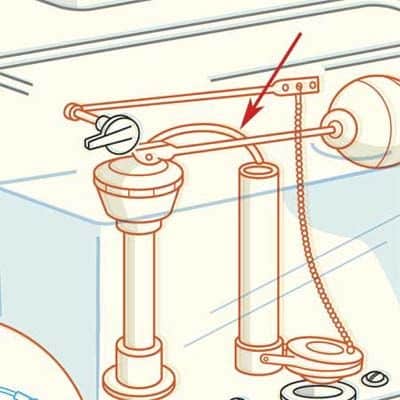
The refill tube conveys incoming water from the ball cock to the overflow tube to fill your toilet bowl after each flush. Check if the refill tube’s end is above water level in tank. If not, you can adjust or trim a little off of the end of the tube with a pair of scissors.
Step 2: Check Your Float Ball
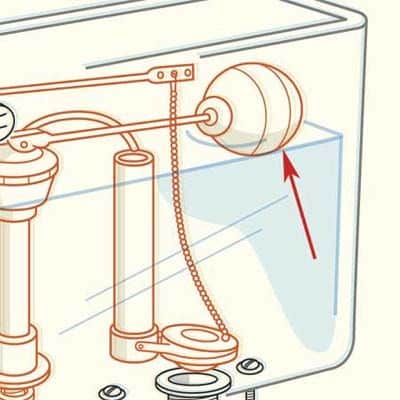
The float ball is just that - a float. As water rises to the correct level in the tank, the rising float will activate the ball cock to shut off the water. Check to see if the float ball activates the ball cock to shut off the water fill when the water level reaches about 1/2" to 1" below the top opening in the overflow tube.
Also check that the float ball does not touch the inside of the tank lid at any time. Adjust the float ball by carefully bending the metal arm attaching it to the ball cock.
If the float ball is damaged, or is filled with water, replace it.
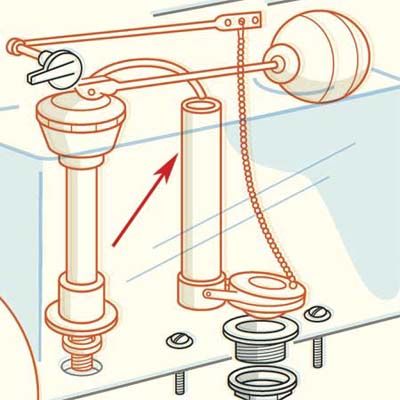
The overflow tube prevents the tank from overflowing. If tank water is constantly draining into tube, carefully bend the metal arm of the float ball as indicated above.
Step 3: Check Your Flapper and Chain

When you flush, the rubber flapper lifts to let tank water flow into the bowl. If it does not seat properly, it can cause water to leak though. This is the most common type of toilet leak.
Check to see if there are mineral deposits crusted on the edges of the flapper and/or on the valve seat below the flapper. If so, gently scrub the mineral deposits off to tighten the seal.
If you use bleach or toilet cleaner tabs in the tank, the chlorine will damage the rubber flapper. Check to see if the rubber flapper appears deteriorated, and if so, it needs replacement.

The chain connects the flush handle to the flapper and will lift the flapper when you flush. Check if the chain is either too short or long, thus interfering with the flapper closing. If so, adjust accordingly.
Step 4: Check Your Ball Cock

The ball cock is essentially an on/off valve, regulated by the float ball, that allows water to fill the tank and bowl after each flush. If all other steps above have not fixed the problem, the ball cock could be faulty and may need to be replaced.
Float-Cup Mechanism

If you open the lid to the tank and you don't see a float ball, you have a float-cup flush mechanism. This type is generally installed in newer constructions and looks like the picture above. When it comes time to retire an old ball-cock flush mechanism, these all-in-one plastic replacements stocked by home centers make for an easy fix. Float-cup mechanisms go in quickly and adjust easily for simple repairs.