
Increase in Special Water Service Charges

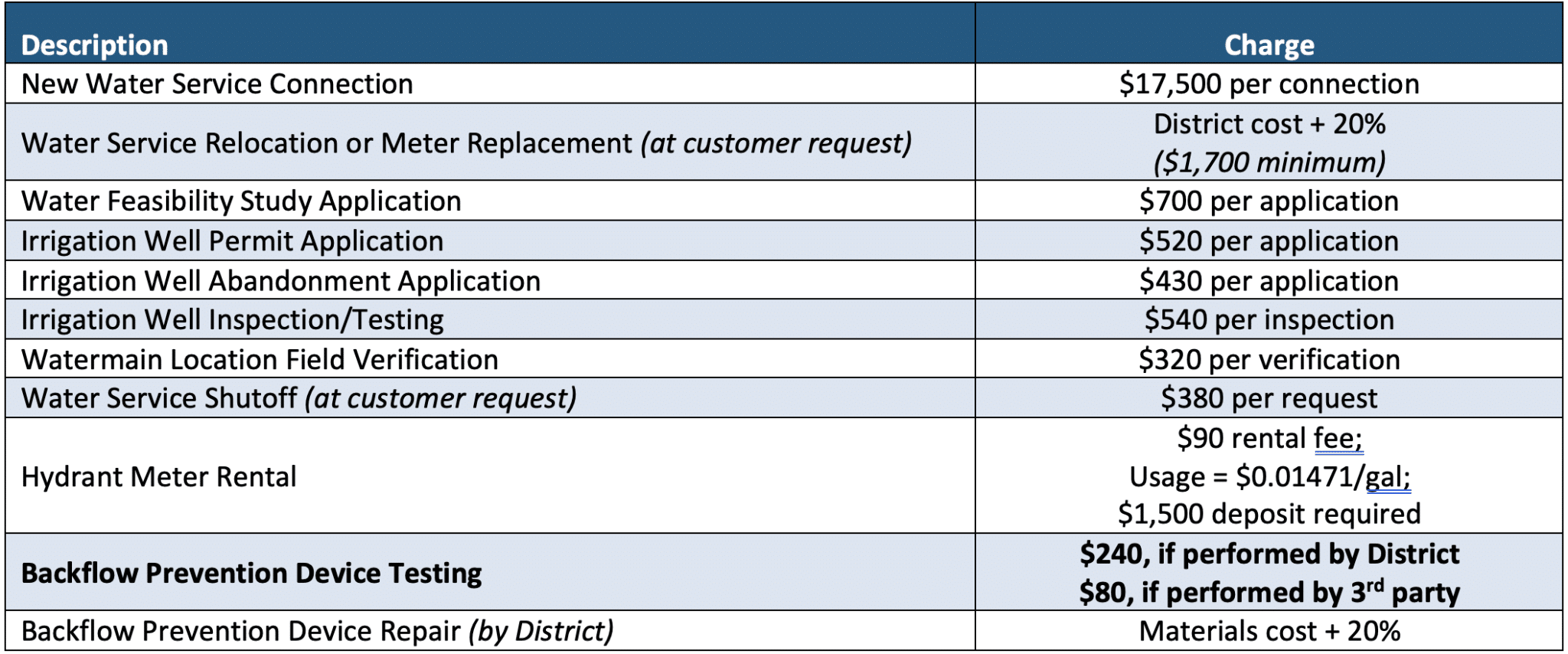
As we discussed last month, the Board of Directors approved the District’s new 5-year water rate schedule that went into effect on October 1, 2025. In addition to these changes, the Board also adopted a new schedule of special water service charges provided by the District. These charges had not been adjusted in over 15 years and were no longer reflective of the actual cost to the District to perform the service.
The new schedule of fees is indicated below and posted on our website. Of particular note is the new cost of testing your backflow prevention device. Although you are not required to use the District, we do provide this service. If you choose to have a certified third party test your device, the District still charges an administrative fee to process and track the testing results in our database.
If you have any questions, please contact us here at the office at (415) 868-1333 or by email at info@stinsonwater.org.
Landscaping Selection Effects on your OWTS

Among the most frequently asked questions of the District concerns proper plant selection for landscaping in the vicinity of your onsite wastewater treatment system (OWTS). This selection is important since incorrect landscaping carries significant risk to your OWTS, including:
- Root intrusion can effectively block pipes, break tanks, and clog both sand filters and dispersal fields.
- Prevention of evapotranspiration and oxygen transfer to and from your sand filter and/or dispersal field will cause them to fail.
- Excess water (via irrigation or roof drains for example) will saturate your sand filter and/or dispersal field causing them to fail.
Here are some useful landscaping guidelines to protect your OWTS:
- Do NOT plant trees or woody shrubs directly on or near your tanks, sand filter, or dispersal field. Problematic species include, but are not limited to: Monterey Pine, Monterey Cypress, Eucalyptus, Willow, Bay, Pepper, Poplar, Alder, Aspen, Mayten, Birch, Juniper and Echium.
- Avoid ivy and ice plants since they retain too much water and restrict both evapotranspiration and oxygen transfer. The roots also clog pipes, sand filters, and dispersal fields causing them to fail prematurely.
- Do NOT cover your sand filter or dispersal field with plastic, as this prevents evapotranspiration and oxygen transfer.
- Avoid sod that requires watering because the excess water will result in saturation of your sand filter and/or dispersal field.
- Minimize any activities that result in soil compaction on your sand filter and/or dispersal field. Never drive across or park on a sand filter. Vehicular traffic and parking is allowed on a dispersal field, but only when it has been specifically designed for traffic loads. If you are unsure if your system is designed to allow for traffic loads, please contact the District for assistance.

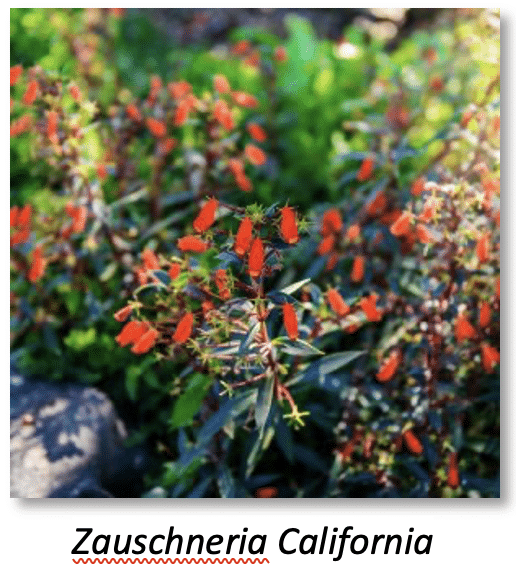
Remember there are generally only about twelve inches of cover soil between finished grade and the pipes in your sand filter and/or dispersal field. Plants with roots extending beyond this depth should be avoided on and around tanks, sand filters, and dispersal fields. Generally, drought-tolerant plants with shallow roots should be acceptable choices.
The District’s inspectors will be assessing the hazards presented by landscaping as part of our regular inspection of your OWTS and will issue Maintenance Orders as necessary to address what is found on your property.
Document Request
Submit form to request a digital copy