
All properties in Stinson Beach use some type of OWTS to treat and dispose of domestic wastewater. Systems range from water-tight holding tanks to single or dual-gravity leachfield systems, to systems that have an aerobic unit (recirculating textile filter, sand filter or gravel filter) that pre-treats the wastewater prior to disposal in a leachfield.
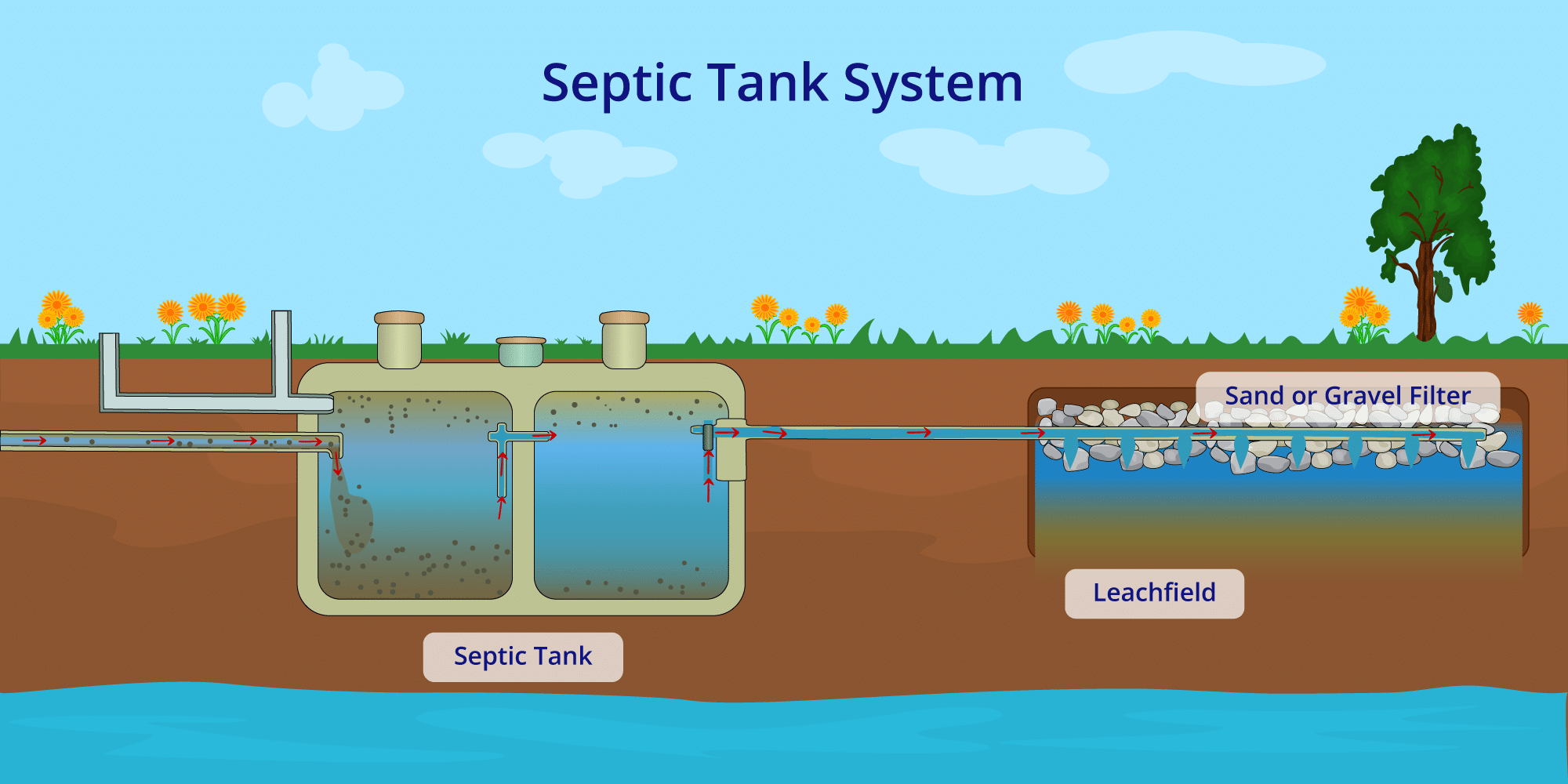
Septic Tank
Wastewater flows by gravity from the various plumbing fixtures in a home into the septic tank. The septic tank provides a place to hold the waste and begin the treatment process. Septic tanks are designed to partially digest the waste in domestic wastewater.
For an onsite system to function effectively, the septic tank must retain the majority of the solid material contained in wastewater. Septic tank size is generally at least three times the daily design wastewater flow rate. This means that the average cup of water that goes down the drain will spend three days in the septic tank before it flows or is pumped out to the leachfields.
For a septic tank system to succeed in separating solids from liquid waste, the accumulated solids must be pumped periodically by a licensed septic tank pumper. The frequency of pumping varies by use and practices of each household. Most full-time residents can expect to pump their system every three to five years. Failure to pump will result in the accumulation of sludge, which will start to cause your OWTS to fail.
Pretreatment Systems
Many regions of Stinson Beach do not contain adequate depth to groundwater and/or are comprised of soils or sands that are too coarse, percolate too rapidly and therefore do not adequately purify the effluent of pathogens nor adequately protect the groundwater. To mitigate for these conditions, a pre-treatment unit is required between the septic tank and leachfields. Typical types of pretreatment are self-contained recirculating textile filters or sand filters made of a mixed media, self-contained aerobic bed of sand and gravel that removes the majority of the pathogens, organic compounds and oxygenates the effluent before it reaches the leachfields.
Wastewater Leachfields
From the septic tank or pump vault, the wastewater is distributed into leachfield trenches that further treat and then dispose of the wastewater. Basically, all leachfields consist of perforated pipe and gravel that distributes the septic tank effluent into the surrounding soilwhere aerobic bacteria decompose the majority of the pollutants in the effluent.
Engineered systems installed in Stinson Beach have two complete leachfields with a diversion valve. This manual or automated valve diverts the effluent to one leachfield allowing the other to rest. The District generally recommends using this valve to switch between leachfields every six months.
Maintenance
Maintenance is the single most important consideration in making sure your OWTS will work well over a long period of time. Too often, homeowners forget that whatever goes down the drain or toilet ultimately either finds its way into the soil or remains in the septic tank until it is pumped out. Use common sense, and the recommendations herein and you should have few problems with your OWTS.
Why Worry?
The threat of disease is a key problem with treating human wastewater. Domestic wastewater may contain bacteria and viruses that cause dysentery, hepatitis, and typhoid fever. To protect your health, it is important to exclude these organisms from both surface and groundwater. Fortunately, soil and soil bacteria can effectively remove pathogenic (disease-causing) micro-organisms from wastewater treated in a properly functioning OWTS.