
Rules Regarding Your Backflow Prevention Device

Typical backflow prevention device installation
“Backflow” is a term the District uses to describe the undesirable reversal of flow and possible contamination back into a public drinking water system. A backflow prevention device is a testable and repairable in-line assembly that is used to keep undesirable water from entering the drinking water system during a backflow event. In layman's terms, it's essentially a device that stops water from flowing backward in your pipes and into the public water supply. These devices are essential to protect our drinking water system from contamination or pollution due to backflow, and must be tested annually, so please make sure they are easily accessible and free of obstruction.
The District’s Title III – Water System Management Code, adopted by Ordinance 2025-05, requires that all new and existing water service connections from the District must have a backflow prevention device installed. Also, it shall be customer’s responsibility, at their own expense, to provide and install a new backflow prevention device in accordance with District standards at a location approved by the District. Installation must be performed by a licensed plumbing contractor, and it must be tested within 24 hours by a certified backflow prevention device tester following installation and annually thereafter. All backflow testing results must be immediately forwarded to the District. The customer will retain full ownership and responsibility of their backflow prevention device.

Onsite Wastewater Treatment System (OWTS) Good Practices

- DO be wary of overloading your system. Your system is designed for a specific water usage rate--having more people using your system than designed, e.g. a houseful of short-term renters, will damage your system and cause it to fail.
- DO practice water conservation -- the amount of wastewater that your OWTS can handle is limited to the value on your Discharge Permit.
- DO restrict usage during heavy rain events, as high groundwater can flood your system causing damage and failure.
- DO wash clothing and dishes only when you have a full load.
- DO be careful to avoid getting beach sand into your OWTS.
- DON’T flush your toilet unnecessarily.
- DON’T dispose of any of the following into your OWTS: paper towels, sanitary napkins, tampons, disposable diapers, condoms, cigarettes, coffee grounds, cat litter, grease and/or oils.
- DON’T use water during a power outage--components of your OWTS rely on power and will not operate properly without it.
- DON’T use septic tank additives, or dispose of any toxic chemicals.
- DON’T drain pools, hot tubs or spas into your OWTS – doing so will overload your OWTS causing it to fail.
- DON’T plant trees or shrubbery in the leachfield, or allow roof drains to drain onto the leachfield area.

Be Mindful of Your OWTS
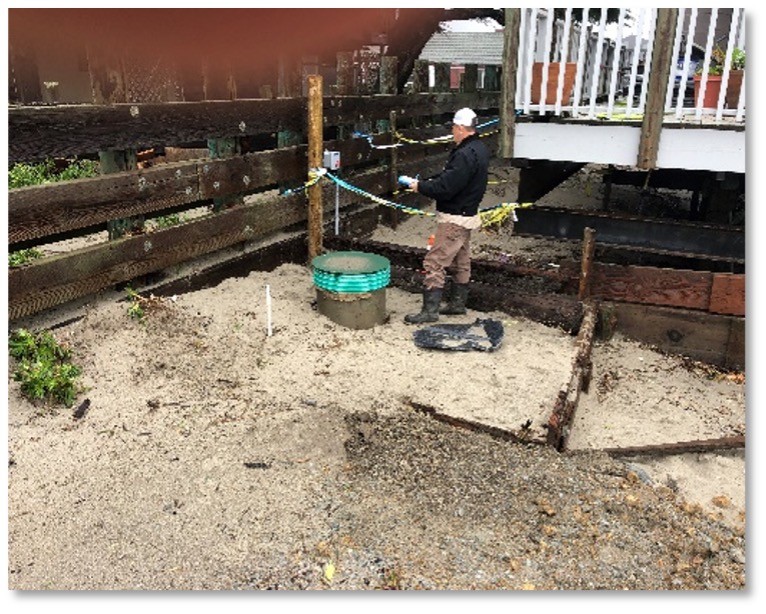
Saturated ground can cause your OWTS to surcharge leading to a surface spill of wastewater, which is a serious health and public safety hazard. If your system experiences these conditions, please contact your wastewater maintenance provider or septic contractor immediately. Regardless of weather, you should never ignore or just silence a septic alarm—there is a reason the alarm is sounding.
If this happens, please contact your wastewater maintenance provider or septic contractor immediately. Also, if you silence your neighbor’s alarm be sure to notify them so they can take appropriate action. A list of wastewater maintenance providers and septic contractors is available.
Document Request
Submit form to request a digital copy