
Costs of Effective Asset Management

Back in January, we talked about “Effective Asset Management” (EAM). As you will recall, EAM is essentially developing a management approach to maximize the useful life and minimize the cost of our assets. The last of the four pillars of EAM is where the rubber hits the roads – Rates and Budget. Without sufficient funding, the EAM process falls apart causing assets to fail both prematurely and unexpectedly. This also leads to significant and prolonged service outages, catastrophic failures, and an increase in long-term operational and maintenance costs.
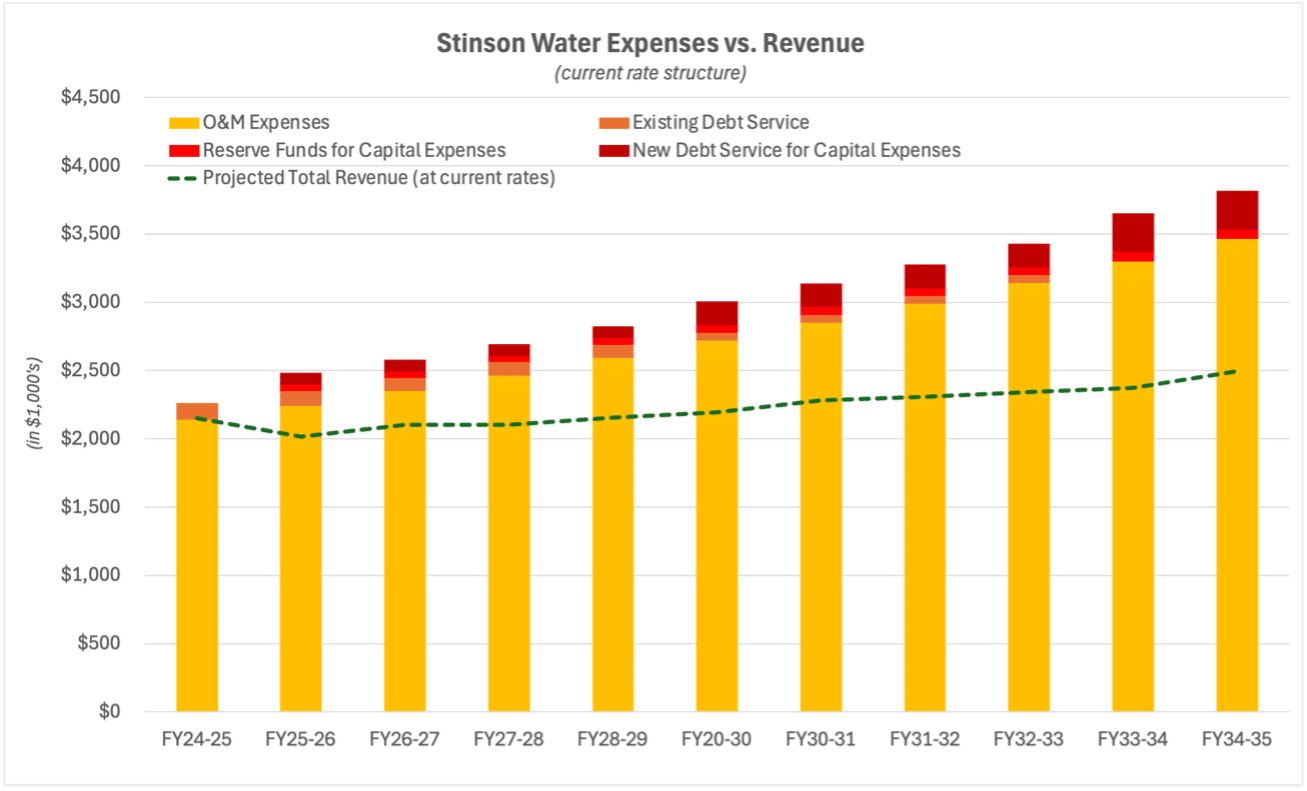
The District last changed its rates in 2009. Since then, the cost of operating and maintaining our system has been steadily increasing, as has our need for capital expenditures. To evaluate these long-term costs compared to projected revenue generated under our current rates, the District conducted a comprehensive rate study. Results of this study show that projected revenue generated under our current rates is not nearly enough to cover total anticipated expenses.
As such, the Board is scheduled to vote on whether to proceed with starting the Prop. 218 process to potentially adopt new water rates at its regular meeting on April 19, 2025.
Understanding the Value of Your Water (revisited)
Back in January, we talked about understanding the actual value of your tap water versus buying bottled water. As you will recall, the water quality in your tap significantly higher than you would find in any bottled water (tap water is MUCH more highly regulated), AND your tap water is also considerably cheaper.
Assuming you are an average water user in our system at around 3,500 – 4,000 gallons per month (which accounts for about 95% of our customers), then your water usage will be charged at the District’s Tier 1 rate of $0.002603 per gallon. In other words, that 16.9 fluid ounce bottle you purchased at a store would cost you about 3 one-hundredths of one cent (i.e. $0.0003) to fill from your tap. To put it another way, you could fill that same 16.9 fluid ounce bottle from your tap over 980 times to spend the same amount per bottle as you would had you bought it from a store.
Stinson Water Rate Comparison
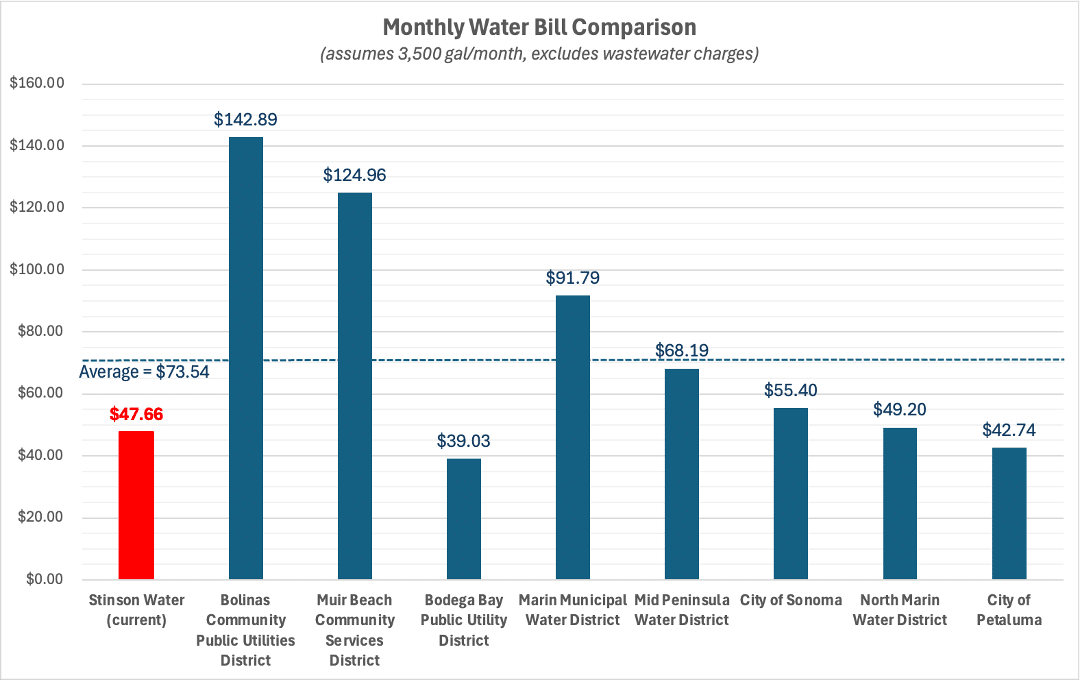
With all this talk about how cheap my tap water is compared to bottled water, how does my water rate compare to other local agencies? Ours is really expensive, right?
Actually, if you compare Stinson Water’s rates with other local agencies, you’ll find that our current rates are actually some of the cheapest in the area. Please note that this looks at just the water base fee and usage charges on your bill (wastewater base fees are excluded, for an “apples-to-apples” comparison).
Document Request
Submit form to request a digital copy